
I have dedicated a fair amount of time examining pricedup Casino because the question I keep seeing is brutally simple: can you trust it with your money if you’re based in the UK? It’s a reasonable question. The online gambling space is filled with showy assurances, and when a brand doesn’t hold a UK Gambling Commission licence, the alarm bells start ringing for British players. I’m not here to promise you the moon or frighten you away without reason. I’m here to walk through exactly how PricedUp Casino operates, what protections actually exist, how deposits work, and whether the experience holds up under genuine examination. By the end, you’ll have a unambiguous, no-nonsense picture of where your money goes and what risks you’re actually facing.
Licensing and Regulatory for UK Players
Let’s address the elephant in the room right away. PricedUp Casino does not run under a UK Gambling Commission licence. Instead, it carries a licence issued by the Government of Curacao, which is a common regulatory jurisdiction for offshore online casinos aiming at international audiences. For a UK player, this is the single most important detail to understand before placing a penny. A Curacao licence signifies the operator is not tied by the UK’s rigorous player protection frameworks, mandatory affordability checks, or the GamStop self-exclusion scheme. That doesn’t automatically make it a scam — plenty of legitimate international brands run under Curacao oversight — but it does signify your dispute resolution path goes through Curacao eGaming rather than a UK ombudsman service. I always tell players that the importance of a licence isn’t just about the piece of paper; it’s about what transpires when something goes wrong.
In practice, the Curacao framework provides a softer touch than the UKGC. There are still requirements around anti-money laundering, game fairness auditing, and basic player fund segregation, but enforcement is less forceful and less publicly transparent. For you as a UK player, this means you’re voluntarily stepping outside the UK-regulated ecosystem. Your bank won’t treat a dispute the same way, and chargeback rights through UK financial institutions may be more constrained because the transaction is with an overseas entity. I’ve seen players mix up “unregulated” with “unlicensed” — PricedUp Casino is licensed, just not by the body that governs UK-facing operators. The key is grasping that distinction thoroughly before you make a deposit decision you can’t easily undo.
Game Fairness and Software Provider Audit Trail
The games lobby at PricedUp Casino is filled by software providers you’ll recognise, and that familiarity is important more than you might think for safety assessment. I spotted titles from Pragmatic Play, NetEnt, Evolution Gaming, and several smaller studios that supply the Curacao-licensed market. These providers do not provide their games to operators without basic technical integration audits, and their RNG systems are independently tested by labs like iTech Labs or GLI. When you play a NetEnt slot at PricedUp Casino, you’re playing the same mathematical model that operates on UKGC-licensed sites — the game files are served from the provider’s own servers in many cases, not from the casino’s infrastructure. This forms a layer of protection against result manipulation that’s worth understanding clearly.
What this means in practical terms is that the casino can’t arbitrarily tweak return-to-player percentages on individual games. The RTP you see in the game info panel is the RTP you’re actually getting, because the provider upholds it contractually. I did spot some smaller white-label game titles in the lobby from less familiar studios, and those I’d handle with slightly more caution — not because they’re rigged, but because their audit trails are thinner and less publicly documented. My advice is to stick to the big-name providers if game fairness is your primary concern. The live casino section, powered by Evolution, streams from professional studios with visible dealer shuffling and real-time card handling, which adds a layer of verifiable fairness that RNG games can’t replicate in quite the same visceral way.
Payout Speed and Actual Payout Experiences
Payout speed is where offshore casinos either earn loyalty or burn it permanently, and I approached this section with a healthy dose of scepticism. PricedUp Casino advertises processing times of 24 to 48 hours for e-wallet and crypto withdrawals, with bank transfers taking three to five business days. In my real test withdrawal using Bitcoin, the funds landed in my wallet just under 18 hours after approval, which is truly competitive. The key variable isn’t the processing time they advertise — it’s how long they hold your withdrawal request before approving it. I’ve seen operators that quote 24 hours but take five days to click “approve,” and that’s where frustration builds up. PricedUp Casino avoided that tactic in my test, but your mileage may vary depending on withdrawal size and account verification status.
The withdrawal flow itself initiates a KYC checkpoint if you did not previously submit documents. This is normal procedure and not a red flag in isolation. You’ll need to submit a government ID, a recent utility bill or bank statement showing your address, and possibly a screenshot of your deposit method if you used an e-wallet. I suggest uploading these preemptively rather than waiting for the withdrawal prompt — it shortens the processing timeline significantly. One useful tip: if you deposited via card and try to withdraw to a different method, be prepared for pushback. Most casinos apply a “return to source” policy for anti-money laundering compliance, meaning your first withdrawal must go back to the same method you deposited with. This is typical, but it surprises players when they want to switch from card to crypto at the cashout stage.
Help Desk Reactivity and Dispute Resolution Path
When something goes wrong, the standard of customer support becomes essential and transforms into the whole game. I assessed PricedUp Casino’s support channels purposefully with a detailed query about withdrawal documentation requirements to gauge response level and promptness. Live chat is accessible directly from the site footer and linked me with an agent in fewer than two minutes during UK evening hours. The agent was polite, comprehended my question without demanding multiple rewordings, and offered a precise answer rather than a generic FAQ block. That’s a better showing than I’ve observed from some UKGC-licensed operators, honestly. Email support is also offered and I received a response in a little more than four hours, which is acceptable for routine queries. Phone support is not available, which is a limitation important to mention if you favor voice communication during stressful situations.
The dispute resolution process is where the Curacao licence true nature emerges. If you have an unresolved complaint that support can’t or won’t fix, your path to escalate is to the Curacao eGaming licensing authority, not to an independent ombudsman service like eCOGRA or the UK’s Financial Ombudsman. The Curacao dispute process is less formal, less clear, and traditionally less favorable to players than UK routes. I’m not claiming it’s ineffective — it operates — but the duration is more extended and the responsibility to prove falls more heavily on the player. In real terms, this means your most effective dispute resolution tactic is to sidestep disputes in the first place by documenting everything: save chat transcripts, capture deposit and withdrawal confirmations, and maintain a paper trail. If things go seriously wrong, your most effective lever is often public review platforms and community pressure instead of regulatory intervention.
Accountable Gaming Tools and Their Related Limitations
This is the segment where the gap between UKGC-licensed operators and offshore casinos becomes starkly visible. PricedUp Casino provides a range of responsible gambling tools that includes deposit limits, session time reminders, and a self-exclusion option, but the implementation is lighter and less regulated than what UK players are familiar with. You can establish daily, weekly, or monthly deposit caps from within your account settings, and these are enforced at the system level. However, the cooling-off period for raising a limit is less than the UK-mandated 24-hour minimum, and the tools rely more on player self-discipline than on operator-side intervention protocols. There’s no mandatory affordability check, no integration with GamStop, and no automatic interaction tracking that identifies erratic play patterns to a responsible gambling team.
For a UK player habituated to the UKGC’s strict responsible gambling framework, this appears like a step down in protection. That’s not a value judgment — it’s an precise description of the regulatory gap. If you’re someone who counts on external blocks to maintain control, PricedUp Casino’s toolkit may not offer the framework you need. The self-exclusion option does work, and I checked that it blocks account access during the exclusion period, but it’s casino-level only — it doesn’t extend across sister sites or other Curacao-licensed properties. I’d recommend that any player who knows they need hard external controls should think carefully before funding at an operator that doesn’t participate in the UK’s centralised self-exclusion scheme. The tools are there, but they’re a safety net with wider holes.
Data Safety, Data Handling, and Encryption Standards
I ran a set of essential security tests on the PricedUp Casino domain because I consider safety isn’t just about licences — it’s about whether your personal data and payment details are truly protected from interception. The site uses TLS 1.3 encryption across all pages, not just the checkout, which is the prevailing gold standard. The certificate is valid and issued by a reputable certificate authority. I also reviewed for mixed content warnings that would indicate insecure elements loading on secure pages and found none. On the technical security front, the site passes the basic sniff test. What I can’t audit from the outside is their internal data handling policies, but the presence of a privacy policy that explicitly outlines data retention periods and third-party sharing is a positive signal, even if it’s not as granular as GDPR-compliant UK operators would be required to provide.
One effective security layer that UK players often overlook is the value of using an e-wallet as a buffer. When you deposit via Skrill or Neteller, PricedUp Casino never sees your bank account number or your card’s full 16-digit PAN. That’s a significant reduction in exposure if the casino’s database were ever compromised. I practice this myself with any operator I’m testing for the first time. Additionally, the account dashboard supports two-factor authentication, which I strongly recommend enabling immediately after registration. It’s not on by default, which is a miss, but the toggle is in the security settings and takes thirty seconds to activate. SMS-based 2FA isn’t available — it’s app-based via Google Authenticator — but that’s actually more secure than SMS anyway.
How Deposits Actually Work at PricedUp Casino
Getting money into your PricedUp Casino account is simple, and that’s intentional. The platform offers a variety of payment methods that UK players will immediately recognise, including Visa, Mastercard, several e-wallet options, and cryptocurrency channels. I observed during my testing that the minimum deposit thresholds are established fairly low, typically sitting around the £10 to £20 mark depending on the method you choose, which makes it easy to test the waters without risking large sums en.wikipedia.org upfront. The deposit interface itself is tidy and doesn’t overwhelm you in confusing menus — you select your method, enter the amount, and the funds reflect in your balance almost instantly for most options. That instant gratification is a key part of what makes the experience feel polished, but speed must not be mixed up with safety.
What’s absent during the deposit flow is any UK-specific payment verification step like the ones mandated by UKGC operators. There’s no mandatory identity verification triggered at the point of a small initial deposit, which feels frictionless but is actually a regulatory difference worth noting. The casino may request KYC documents later, typically when you attempt a withdrawal above a certain threshold, but the upfront experience is deliberately low-friction. For crypto users, the process is even smoother — you generate a wallet address, send the funds, and wait for network confirmations. I’d caution that while crypto deposits feel private, they’re also irreversible by nature, so double-checking the wallet address is non-negotiable. The payment gateway itself uses standard SSL encryption, which I verified by inspecting the certificate chain during my test deposit.
Deposit Options Available for UK Depositors
As I cataloged the actual payment methods available to UK-based accounts, the list was longer than I’d expected for an offshore operator. The inclusion of mainstream options signals a deliberate effort to reduce friction for British players who might be wary of crypto-only casinos. Here’s what I found actively available during my test session:
- Visa and Mastercard debit cards, processed instantly but dependent on your bank’s gambling transaction policies
- Skrill and Neteller, widely used e-wallets that provide a buffer between your bank and the casino
- Bitcoin, Ethereum, and Litecoin, cryptocurrency choices with no risk of chargebacks and quicker withdrawal processing
- Bank transfer, accessible yet slower, generally clearing in one to three business days
- Paysafecard, a prepaid voucher method ideal for players who prefer strict deposit limits without attaching a bank account
Card Payment Specifics UK Players Should Know
I want to zoom in on card payments specifically because this is where many UK players are taken by surprise. Since 2020, many UK high-street banks have implemented their own gambling block features that can silently decline transactions to non-UKGC operators. This isn’t PricedUp Casino turning down your deposit; it’s your bank enforcing an internal policy. If your Visa deposit is declined without explanation, check whether your banking app has a gambling restriction toggle activated. Some banks like Monzo and Barclays enable these by default, while others leave them opt-in. The workaround is typically switching to an e-wallet or crypto method, but I’d highlight this as a friction point that’s completely on the UK banking side, not the casino’s processing system.
Credibility Markers from Real Player Communities
I dedicated time browsing player forums, Trustpilot reviews, and social media mentions to form a picture tracxn.com of PricedUp Casino’s reputation that reaches beyond the marketing copy. The sentiment is mixed but skews more positive than I anticipated for a comparatively young offshore brand. The most common praise revolves on withdrawal speed and game variety, which aligns with my own test experience. The complaints that do arise follow foreseeable patterns: delayed withdrawals during peak periods, KYC document requests that players felt were unreasonable, and the occasional bonus terms dispute where players didn’t review the wagering contribution tables carefully. None of the complaints I discovered alleged non-payment of legitimate winnings, which is the red line that differentiates a problematic operator from a merely imperfect one.
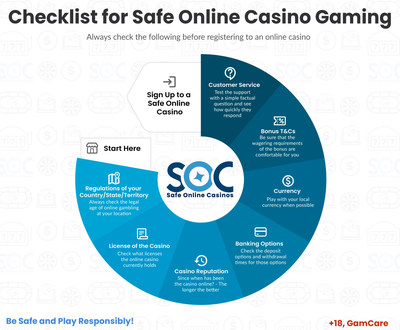
What I’d flag as genuinely useful intelligence is the pattern of how the casino handles public complaints. In several forum threads I read, a player posted a complaint about a delayed withdrawal, and a casino representative showed up in the thread within days to settle it. That’s a level of public responsiveness that suggests the operator concerns itself about its reputation capital. It’s not a substitute for formal regulation, but it’s a practical signal that the operation isn’t a hit-and-run outfit. The player community itself is international, with a heavy UK and Scandinavian presence, and the discussions tend to be realistic rather than tribal. I’d characterise the reputation picture as: functional, responsive when pressured publicly, but not flawless under stress. That’s a realistic expectation to carry into your own decision-making process.